
What Is a Tree Removal Cost Calculator and How Does It Work?
A tree removal cost calculator is an online tool that instantly estimates how much you’ll pay to remove a tree from your property. This digital solution eliminates the guesswork for homeowners unfamiliar with arborist pricing by providing transparent cost projections within seconds.
How Does a Tree Removal Cost Calculator Work?
The calculator requires you to input several key details about your tree. These essential data points include:
- Tree height (typically measured in feet or meters)
- Trunk diameter (measured at breast height, approximately 4.5 feet from the ground)
- Tree type (species such as oak, pine, maple, or palm)
- Location details (proximity to structures, power lines, or other obstacles)
- Property access (ease of equipment entry and maneuverability)
Once you submit this information, the estimate calculation happens automatically. The tool cross-references your inputs against industry pricing databases that account for labor hours, equipment needs, and regional cost variations. Tree height directly impacts the complexity and time required for removal, while trunk diameter indicates the tree’s weight and cutting difficulty.
The calculator’s algorithm weighs each factor proportionally. A 60-foot oak near a house requires more precision work than a 20-foot tree in an open yard, which the system reflects in higher cost estimates. Location data helps the tool adjust for local market rates and disposal fees specific to your area.
Why Use Our Tree Removal Cost Calculator?
Use Our Tree Removal Cost Calculator for an Instant Estimate by simply entering accurate measurements. The system generates a price range rather than a single figure, acknowledging that final costs depend on variables only visible during an in-person assessment.
Why Should Users Trust the Estimates from These Calculators?
Tree removal cost calculators build trust through transparent pricing methodologies that eliminate guesswork and hidden fees. These tools use standardized algorithms based on real-world data from thousands of completed tree removal projects, ensuring consistent estimates across similar scenarios.
The reliability comes from several key factors:
- Industry-standard pricing models that reflect current market rates for labor, equipment, and disposal
- Regional cost adjustments that account for local economic conditions and service availability
- Clear breakdowns showing how each input factor contributes to the total estimate
How Calculator Estimates Compare to Professional Quotes
Calculator estimates typically fall within 15-25% of formal quotes provided by professional arborists after on-site evaluations. This range exists because calculators work with limited information while arborists assess additional factors during physical inspections.
The comparison reveals important patterns:
Calculator strengths:
- Immediate ballpark figures for straightforward removals
- Accurate estimates for standard trees in accessible locations
- Reliable cost ranges for common scenarios (30-50 foot trees with clear access)
Where formal quotes differ:
- Complex situations requiring specialized rigging or crane work
- Properties with challenging access or proximity to structures
- Trees with disease, decay, or structural instability
Many tree service companies report that calculator estimates align closely with their initial quotes for approximately 70% of standard residential projects. The remaining 30% involve complications that only become apparent during professional site assessments.
The Transparency Advantage
Reputable calculators display their pricing methodology openly, showing users exactly how height, diameter, and location factors influence costs. This transparency allows property owners to understand why a 60-foot oak costs significantly more than a 30-foot maple, building confidence in the estimate’s legitimacy.
What Factors Influence the Accuracy of Tree Removal Cost Estimates?
The precision of your tree removal estimate hinges directly on the quality and completeness of the information you provide. When you input exact measurements for tree height, trunk diameter, and specific details about the tree’s location, the calculator can generate a more reliable cost projection that reflects real-world pricing.
Critical Input Details That Determine Estimate Accuracy
The calculator’s algorithm relies on several key data points to calculate costs:
- Tree height measurements: A 30-foot tree versus a 60-foot tree can mean the difference between $300 and $1,200 in removal costs
- Trunk diameter at breast height (DBH): Thicker trunks require more cutting time and specialized equipment
- Tree species identification: Hardwoods like oak typically cost 20-30% more to remove than softwoods like pine
- Proximity to structures: Trees within 10 feet of buildings, power lines, or fences increase complexity and cost
- Number of trees: Bulk removal often qualifies for volume discounts
Guessing or approximating these measurements can skew your estimate by hundreds of dollars. A tree you estimate at 40 feet might actually measure 55 feet, significantly impacting the removal complexity and price.
Variables Affecting Price Beyond Basic Measurements
Several real-world conditions can alter the final cost even when input details are accurate:
Tree Condition and Health Status
A dead or diseased tree presents different challenges than a healthy one. Dead trees become brittle and unpredictable during removal, requiring extra safety precautions. Conversely, some dead trees are easier to dismantle because they’re lighter. Trees with extensive decay or hollow trunks need specialized rigging techniques that add $200-$500 to the base cost. Visit https://www.agriculture.gov.au/biosecurity-trade/pests-diseases-weeds/plant to get more about plant pests and diseases.
Site Accessibility Challenges
The calculator assumes standard access conditions, but your property might present unique obstacles:
- Trees in backyards with no equipment access require manual labor and rope systems
- Sloped terrain or unstable ground conditions necessitate additional safety measures
- Limited working space forces arborists to remove the tree in smaller sections
- Overhead power lines require utility company coordination and specialized insulated equipment
Why Is Professional Tree Removal Recommended Over DIY Methods?
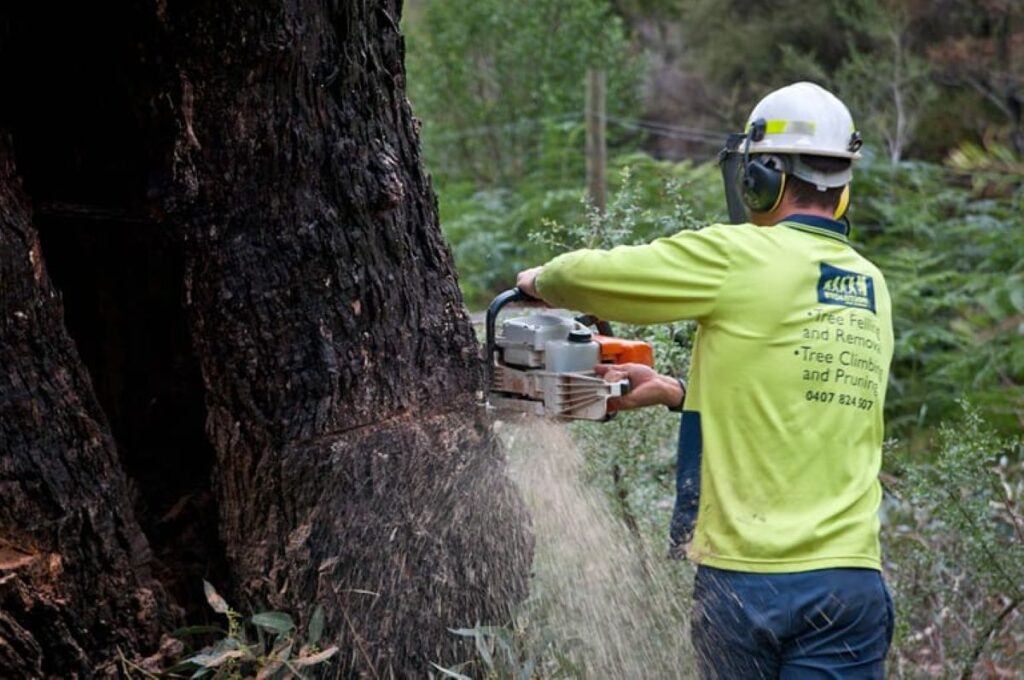
Professional tree removal protects both people and property from serious hazards that homeowners often underestimate. Attempting to remove a tree without proper training exposes you to falling branches, unstable trunks, power line contact, and equipment malfunctions that can result in severe injuries or fatalities.
The Hidden Dangers of DIY Tree Removal
Cutting down trees involves more than operating a chainsaw. Each tree presents unique challenges based on its lean, internal decay, and proximity to structures. Without understanding proper cutting techniques and fall patterns, you risk:
- Crushing injuries from unpredictable tree falls or kickback from equipment
- Electrocution hazards when trees grow near power lines
- Property damage costing thousands more than professional services
- Legal liability if falling debris injures neighbors or damages their property
- Physical strain from lifting heavy logs and operating dangerous machinery
Many homeowners discover too late that their homeowner’s insurance may not cover DIY tree removal accidents. Medical bills and property repairs quickly exceed what professional services would have cost initially.
What Experienced Arborists Bring to the Job
Certified arborists complete years of training in tree biology, physics, and safety standards before handling complex removals. They assess each tree’s structural integrity, identify weak points, and plan precise cutting sequences that control the direction of fall.
Specialized equipment makes dangerous jobs manageable. Professional crews use:
- Bucket trucks and cranes for accessing tall trees safely
- Rigging systems that lower branches in controlled sections
- Stump grinders that remove roots below ground level
- Wood chippers that clear debris efficiently
- Personal protective equipment including helmets, eye protection, and cut-resistant clothing
The Value of Insurance Coverage
Licensed tree removal companies carry comprehensive insurance coverage that protects your property and their workers. This includes general liability insurance for property damage and workers’ compensation for crew injuries. When you hire insured professionals, you transfer the financial risk away from yourself.
Reputable companies also maintain current certifications from organizations like the International Society of Arboriculture (ISA). These credentials demonstrate ongoing education in the latest safety protocols and removal techniques.
How Can Using a Tree Removal Cost Calculator Save Time and Money?
A tree removal cost calculator delivers instant pricing estimates without the typical 24-48 hour wait for professional quotes. Instead of scheduling multiple consultations and waiting days for callbacks, property owners receive preliminary figures in minutes by entering basic tree information into the online tool.
Immediate Access to Pricing Information
Traditional quote processes require homeowners to contact multiple tree service companies, schedule site visits, and wait for written estimates. This approach consumes hours of phone calls and coordination. The calculator eliminates this initial time investment by providing baseline cost expectations immediately, allowing users to determine whether tree removal fits their current budget before investing time in formal consultations.
Strategic Budget Planning
Property owners gain the ability to plan financially before committing to service appointments. The calculator reveals whether a tree removal project costs $300 or $3,000, helping users decide if they need to:
- Adjust their budget timeline
- Explore financing options
- Prioritize which trees require immediate removal
- Allocate funds from other property maintenance categories
These decisions align with effective strategic budgeting, enabling homeowners to manage their finances efficiently while planning for such expenses.
Informed Decision-Making Before Provider Contact
Armed with preliminary cost data, users approach arborists with realistic expectations rather than experiencing sticker shock during formal quotes. This knowledge enables more productive conversations with tree service professionals, as homeowners can discuss specific cost factors and ask targeted questions about pricing variations.
Comparison Shopping Efficiency
The calculator provides a benchmark figure that helps evaluate whether professional quotes fall within reasonable market ranges. Users who receive formal estimates significantly higher or lower than the calculator’s projection can investigate the discrepancy, ensuring they understand what drives the price difference before signing contracts.
Reduced Risk of Unnecessary Site Visits
Some tree removal projects exceed homeowners’ budgets by substantial margins. The calculator prevents wasted time for both property owners and tree service companies by filtering out projects that aren’t financially viable. If the estimated cost far exceeds available funds, users can postpone the project rather than scheduling consultations for services they cannot afford.
Multi-Tree Project Planning
Property owners with several trees requiring attention can use the calculator to estimate total project costs across multiple removals. This comprehensive view supports strategic planning about which trees to remove immediately versus deferring to future budget cycles, maximizing cost savings through informed prioritization. Such an approach is crucial when considering budget strategy for larger projects like multi-tree removals.
What Should Users Do After Receiving an Estimate from the Calculator?
Schedule a professional site visit to confirm the calculator’s estimate and receive a formal assessment. The online figure serves as a starting point, but only an experienced arborist can account for all variables affecting your specific situation.
Why a follow-up quote matters:
Tree removal involves complexities that no calculator can fully capture. An arborist needs to inspect your property in person to evaluate factors like:
- Underground utility lines near the tree’s root system
- Overhead power lines that complicate removal
- Soil conditions affecting equipment access
- Nearby structures requiring protective measures
- Hidden decay or pest damage inside the trunk
- Local permit requirements and disposal regulations
The calculator provides a budget baseline, not a final price. When you Use Our Tree Removal Cost Calculator for an Instant Estimate, treat the result as a planning tool. Contact 2-3 licensed tree removal companies to request on-site evaluations.
During the site visit, professionals assess risks that impact both cost and safety. They examine the tree’s lean, branch distribution, and proximity to buildings. This hands-on evaluation reveals whether crane assistance is necessary or if climbing techniques suffice.
Request written quotes that itemize services included. Compare how different companies price stump grinding, debris removal, and cleanup. Ask about insurance coverage and certifications. A formal assessment protects both parties by documenting the scope of work before any cutting begins.
The gap between your calculator estimate and the final quote shouldn’t surprise you. Use the initial figure to eliminate companies whose site visit quotes fall drastically outside reasonable ranges.
Related : Everything You Need to Know About Tree Stump Grinding
