
What Is Tree Stump Grinding and How Does It Work?
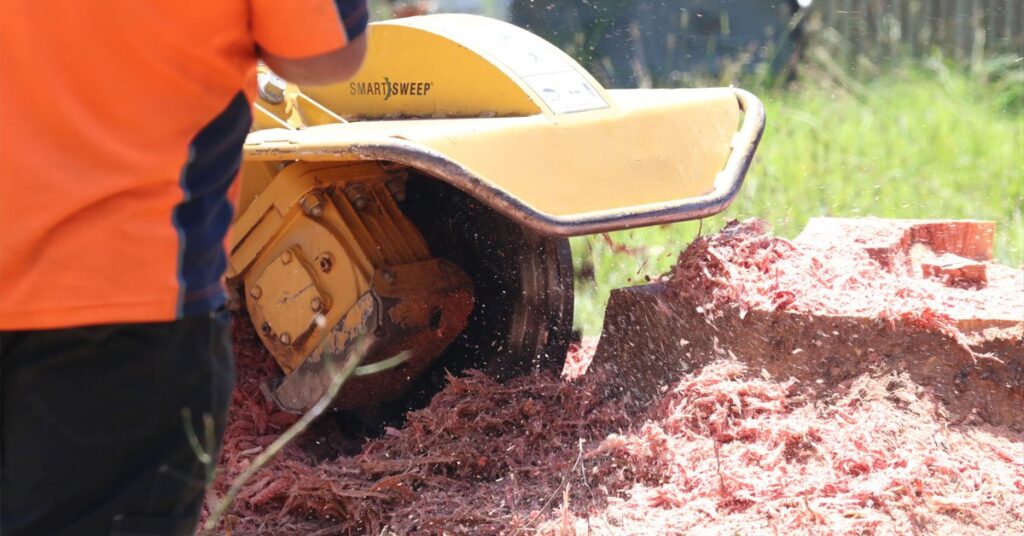
Tree stump grinding uses specialized machinery to mechanically reduce a tree stump into small wood chips. A stump grinder features a rotating cutting disk with carbide teeth that chips away at the wood, systematically breaking down the stump until it’s completely pulverized.
The Stump Grinding Process
The stump grinder machinery operates by positioning the cutting wheel directly over the stump. Operators move the wheel back and forth across the surface, gradually lowering it deeper with each pass. This methodical approach ensures the stump is ground down to approximately 4-12 inches below ground level, depending on the homeowner’s needs and future plans for the area.
The depth matters because it removes enough of the stump to prevent regrowth while clearing space for new landscaping. Grinding below the surface eliminates visible remnants and any shallow roots that could interfere with future projects.
What Happens to the Ground-Up Material
Tree stump grinding process produces a substantial amount of wood mulch. This byproduct consists of fine wood chips mixed with soil and can serve multiple practical purposes:
- Garden mulch for flower beds and around shrubs
- Compost material when mixed with other organic matter
- Fill material to level the ground where the stump once stood
- Natural ground cover for pathways or rustic landscape areas
Many homeowners choose to spread the mulch throughout their gardens, creating a nutrient-rich layer that retains moisture and suppresses weeds. The remaining material typically fills the depression left by the removed stump, though additional soil may be needed to completely level the area for grass seeding or other landscaping plans.
Why Should Homeowners Consider Removing Tree Stumps?
Tree stumps left in your yard create multiple hazards that extend far beyond their unsightly appearance. The dangers of tree stumps become apparent as decay sets in, transforming what seems like an inert piece of wood into a magnet for destructive pests and structural problems.
1. Pest Infestations
Pest infestations rank among the most serious concerns. Decaying stumps attract carpenter ants, termites, and wood-boring beetles that burrow into the rotting wood. These insects establish colonies within the stump, using it as a breeding ground before potentially migrating to your home’s wooden structures. Rodents like mice and rats also nest in hollow stumps, while snakes seek shelter in the crevices. Wasps frequently build nests in or around stumps, creating dangerous situations for anyone working or playing nearby.
2. Fungal Diseases
The pest attraction doesn’t stop at insects and rodents. Fungi and diseases thrive in decomposing wood, spreading spores that can infect healthy trees, shrubs, and plants throughout your landscape. Honey fungus, for example, can live in dead stumps for years and gradually spread through soil to attack living plant roots. This creates a cycle of disease that threatens your entire garden’s health.
3. Root Damage
Root damage poses hidden but significant risks to your property’s infrastructure. Many homeowners assume that cutting down a tree stops all growth, but roots can continue expanding underground for months or even years after removal. These persistent roots seek water and nutrients, often infiltrating:
- Underground water pipes and sewer lines
- Foundation walls and basement structures
- Driveways, sidewalks, and paved surfaces
- Septic systems and drainage fields
The financial cost of repairing root damage to plumbing or foundations typically far exceeds the expense of professional stump removal. Roots can crack concrete, buckle pavement, and compromise the structural integrity of buildings. Insurance companies may also deny claims for damage caused by roots from stumps that property owners knowingly left in place.
4. Disease Transmission
Disease transmission from stumps represents another critical concern. As stumps decay, they become hosts for various pathogens including root rot diseases, bacterial infections, and fungal spores. These pathogens don’t remain confined to the dead stump—they actively spread through soil contact and root networks
What Are the Common Problems Caused by Tree Stumps in Yards?
Tree stumps create multiple yard hazards that extend beyond pest infestations and root damage. The visible portion of a decaying stump disrupts your landscape’s appearance, creating an eyesore that stands out against manicured grass and garden beds. These remnants consume valuable square footage that could otherwise accommodate flower beds, seating areas, or play spaces for children.
Tripping hazards pose serious liability concerns for property owners. Stumps blend into the landscape, especially when covered by grass or leaves, creating unexpected obstacles for anyone walking across the yard. Children playing, elderly visitors, or guests at outdoor gatherings face increased injury risks. Hidden roots extending from stumps compound this danger, creating uneven ground that catches feet and ankles. To mitigate these risks, it’s essential to consider strategies for making your yard and porch safe from trip hazards.
How Do Stumps Interfere with Lawn Care?
Lawn maintenance issues multiply when stumps remain in place. Mowing around stumps requires constant maneuvering, adding time and frustration to routine yard work. Lawnmower blades risk damage from contact with hard wood or protruding roots. Landscaping projects become complicated as stumps block natural traffic patterns and limit design options. Installing irrigation systems, building pathways, or planting new trees requires working around these obstacles.
The aesthetic disruption extends to professional landscaping efforts. Stumps prevent uniform grass growth, creating bare patches and uneven turf. They interrupt sight lines and disrupt the visual flow of carefully planned gardens. Decorative elements like lighting, statuary, or water features become difficult to position effectively.
What Impact Do Stumps Have on Property Worth?
The property value impact becomes evident during home sales. Potential buyers perceive stumps as deferred maintenance, signaling neglect of the property. Real estate agents often recommend stump removal before listing homes, recognizing that cluttered yards reduce curb appeal. Appraisers may note stumps as detractors in property assessments.
Buyers calculate removal costs into their offers, effectively reducing the home’s selling price. A yard dotted with stumps suggests additional hidden problems, creating doubt about the property’s overall condition. First impressions matter significantly in real estate, and stumps immediately signal work the new owner must undertake
How Is the Stump Grinding Process Carried Out?
The stump grinding process follows a systematic approach that begins with a thorough assessment and ends with a clean, level surface. Professional arborists evaluate the stump’s diameter, height, root spread, and location to determine which grinding equipment will handle the job most effectively. A small residential stump measuring 12 inches in diameter requires different machinery than a massive oak stump spanning 36 inches or more.
1. Stump Assessment Phase
Technicians examine several critical factors before starting any grinding work:
- Stump dimensions – measuring both above-ground height and estimated below-ground depth
- Wood hardness – identifying tree species to anticipate grinding difficulty
- Root system complexity – checking for surface roots that extend beyond the main stump
- Surrounding obstacles – noting nearby structures, utilities, plants, or hardscaping
- Soil conditions – assessing whether rocks or debris might damage grinding teeth
This evaluation determines whether a small walk-behind grinder, a mid-sized self-propelled unit, or a large tow-behind machine is needed. The assessment also reveals potential complications like embedded metal from old fences or chains wrapped around the trunk decades ago.
2. Safety Preparation Steps
Before grinding begins, professionals establish a safe work zone around the stump. They mark underground utility lines by calling 811 or using private locating services to identify buried electrical cables, gas lines, water pipes, and communication lines. Striking these utilities during grinding can cause serious injuries, service disruptions, or expensive repairs.
The work area gets cleared of loose objects, garden decorations, and anything that could become a projectile when struck by flying wood chips. Operators set up safety barriers or caution tape to keep children, pets, and bystanders at a safe distance—typically 50 feet or more from the grinding site. Wood chips can shoot out at high velocities, posing risks to anyone nearby.
Personal protective equipment becomes essential during this phase. Operators wear:
- Safety goggles or face shields to protect eyes from debris
- Hearing protection against the machine’s loud noise
- Steel-toed boots to guard feet from falling equipment or wood chunks
- Heavy-duty gloves for handling machinery and sharp wood fragments
- Long pants and long sleeves to shield skin from flying splinters
Can Homeowners Grind Tree Stumps Themselves or Should They Hire Professionals?
Homeowners can rent stump grinding equipment for DIY removal, but professional stump grinders typically deliver safer and more efficient results. The decision depends on your experience with heavy machinery, physical capability, and willingness to accept DIY stump grinding risks.
Renting Equipment: What DIY Enthusiasts Need to Know
Rental companies offer stump grinders ranging from small walk-behind models to larger self-propelled machines. A typical rental costs between $100-$400 per day depending on the equipment size. While this appears economical compared to professional services, several hidden challenges emerge:
- Learning curve: Operating a stump grinder requires understanding proper technique, depth control, and lateral movement patterns
- Physical demands: Controlling vibrating machinery for extended periods causes fatigue and increases injury risk
- Time investment: Inexperienced operators often take 3-4 times longer than professionals to complete the same job
- Transportation logistics: Renting requires pickup, loading, unloading, and return of equipment weighing 200-1,000 pounds
Heavy-Duty Machinery Requirements and Safety Concerns
Stump grinders use rapidly rotating cutting wheels with carbide teeth spinning at 1,000+ RPM. These machines generate tremendous force capable of throwing debris at dangerous velocities. Professional operators wear specialized protective equipment including face shields, hearing protection, steel-toed boots, and cut-resistant clothing.
The machinery demands constant attention to avoid:
- Flying debris: Wood chips and rocks can project 30+ feet at high speeds
- Underground hazards: Hitting buried utilities, irrigation lines, or rocks damages equipment and creates safety emergencies
- Equipment kickback: Improper blade contact causes violent machine reactions
- Blade contact injuries: Exposed cutting wheels pose severe laceration risks
For those considering the DIY approach, it’s crucial to follow stump grinder safety tips to minimize risks.
When DIY Makes Sense (and When It Doesn’t)
DIY stump grinding might work for homeowners with:
- Small stumps under 12 inches in diameter
- Previous experience operating similar machinery
- Physical strength to maneuver equipment safely
- Clear work areas free from underground utilities
- Adequate time to complete the project without rushing
Professional stump grinders
What Factors Influence the Cost of Tree Stump Grinding Services?
The cost of stump grinding services is influenced by several factors, including:
- The size and diameter of the stump
- The number of stumps being serviced
- The location and accessibility of the stump
- Any additional costs associated with the job
Stump Size and Diameter
The primary factor determining the cost of stump grinding is the diameter of the stump at ground level. Larger stumps require more time, fuel, and blade wear to grind completely. Additionally, a stump’s root system typically extends underground proportionally to its diameter, meaning bigger stumps demand deeper grinding to prevent regrowth.
Tree species also impacts pricing within size categories. Hardwoods like oak, maple, and hickory contain denser wood that dulls blades faster and slows grinding progress. Softer woods such as pine or poplar process more quickly, sometimes qualifying for lower rates.
Number of Stumps Pricing
When multiple stumps need removal, many companies offer reduced per-stump rates for jobs involving three or more stumps. This is because mobilizing equipment once for several stumps proves more efficient than making multiple trips.
Here’s a breakdown of how pricing may work based on the number of stumps:
- Single stump: Full service rate applies
- 2-3 stumps: 10-15% discount per stump
- 4+ stumps: 20-30% discount per stump
Proximity between stumps can also affect pricing. Stumps clustered in one area cost less collectively than stumps scattered across different sections of a property, which require repositioning heavy equipment multiple times.
Location and Accessibility
The location and accessibility of the stump can impact the cost as well. If a stump is positioned near structures, fences, or underground utilities, careful maneuvering and additional safety precautions will be necessary. This precision work typically commands higher pricing compared to stumps in open areas.
Backyard stumps that are only accessible through narrow gates may require smaller, less efficient grinders, resulting in increased labor time and costs. Similarly, if the terrain where the stump is located is sloped or hilly, operational challenges may arise that extend the duration of grinding work and subsequently lead to higher service fees.
Additional Cost Considerations
In addition to the factors mentioned above, there are other potential costs that may be added onto the base charges for stump grinding:
- Cleanup of root systems: After grinding down a stump, any surface roots extending several feet from it will still remain visible unless they are specifically addressed during cleanup.
- Debris disposal: Depending on your agreement with the service provider, they may charge extra for removing wood chips or debris generated from grinding operations.
- Site restoration: If you have plans for landscaping or construction after tree removal/stump-grinding process completion (such as planting new trees), additional expenses might incur based on site restoration requirements.
Understanding these various elements influencing pricing can help you better anticipate costs associated with hiring professional tree care services. Check out more about the use of tree removal cost calculator for an instant estimate.
How Does Tree Stump Grinding Improve Yard Safety and Aesthetics?
Stump grinding transforms your outdoor space by eliminating physical hazards and creating a clean, uniform landscape. The process removes protruding stumps that pose serious tripping risks to children, elderly family members, and guests navigating your property.
Immediate Safety Benefits
Ground-level stumps become invisible obstacles, particularly dangerous when:
- Grass grows over and conceals the stump edges
- Children run and play in the yard without watching their footing
- Visitors unfamiliar with your property walk through dimly lit areas
- Lawn equipment operators focus on mowing patterns rather than obstacles
Removing these hazards reduces liability concerns and creates peace of mind for homeowners hosting gatherings or allowing children to play freely.
Pest Prevention Through Grinding
Decaying stumps attract destructive insects that threaten both yard safety improvement and home integrity. Carpenter ants, termites, and wood-boring beetles colonize rotting wood, establishing populations that eventually migrate toward your house’s wooden structures.
The grinding process eliminates these breeding grounds entirely. Without the moist, decomposing wood that pests require, infestations cannot establish themselves. This proactive approach prevents costly extermination services and potential structural damage to nearby buildings.
Visual Transformation of Your Landscape
Aesthetic enhancement after grinding creates a polished, intentional appearance. Stumps disrupt the visual flow of carefully maintained lawns, drawing attention to dead remnants rather than thriving plants and landscaping features.
The resulting space offers new possibilities:
- Replanting opportunities: Install flower beds, shrubs, or replacement trees
- Lawn expansion: Extend grass coverage for a seamless appearance
- Hardscaping projects: Add patios, walkways, or garden features
- Play areas: Create safe zones for children’s activities or outdoor furniture
Property Value Considerations
Prospective buyers evaluate yards based on usability and maintenance requirements. Visible stumps signal neglected property care and reduce perceived value. Professional grinding demonstrates attention to detail and presents a move-in-ready landscape that requires no immediate remediation.
Real estate professionals consistently note that well-maintained yards with clear, usable space command higher selling prices and attract more potential buyers.
